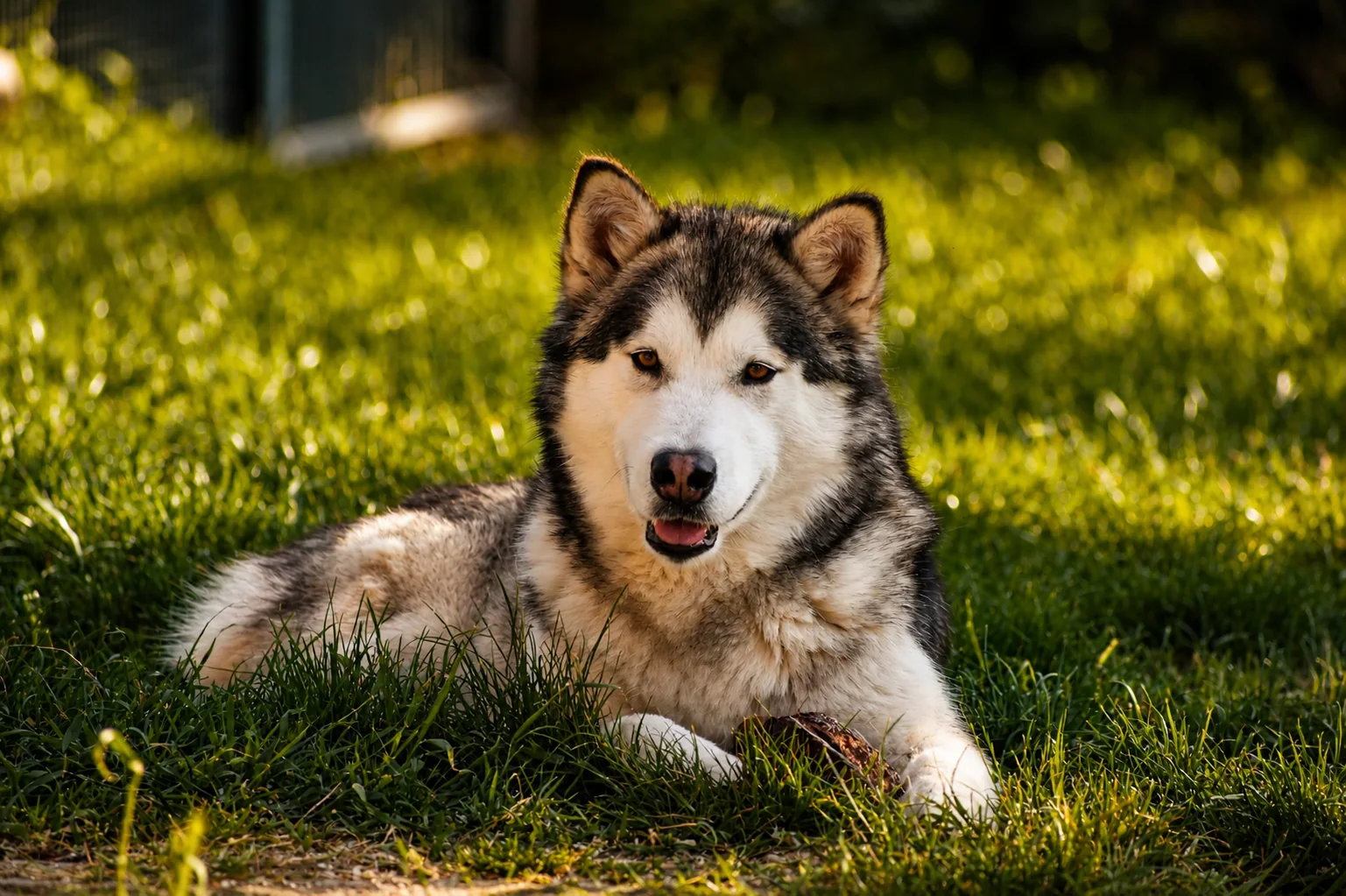
History · selection · temperament
Several thousand years ago, an Inuit people known as the Mahlemiut lived in the far north. Their origins and history are not entirely clear, but they are thought to have migrated from Siberia to Alaska across the Bering Strait before settling in the Kotzebue region. They were nomadic hunters, accustomed to travelling immense distances without rest. Large dogs helped them hunt, travel and manage daily life. These animals were considered full members of the family and often shared the same tent as their people. Dogs showing aggression or instability were removed from the tribe, while the strongest, most resilient and intelligent individuals were favoured. This became one of the earliest forms of deliberate canine selection. Because the Mahlemiut had very little contact with other communities, a recognisable canine lineage gradually developed. Those dogs were very different from today’s Alaskan Malamutes and could weigh several dozen kilograms more, yet they are widely regarded as the ancestors of the modern breed.
The events that transformed America and Alaska also had profound consequences for these communities and their dogs. During the gold rush, prospectors began acquiring dogs from Indigenous populations already under enormous pressure, crossing them with animals whose characteristics seemed more useful in the changing world. The traits of the dogs that had accompanied people for centuries began to change, gradually moving towards the dogs we know today.
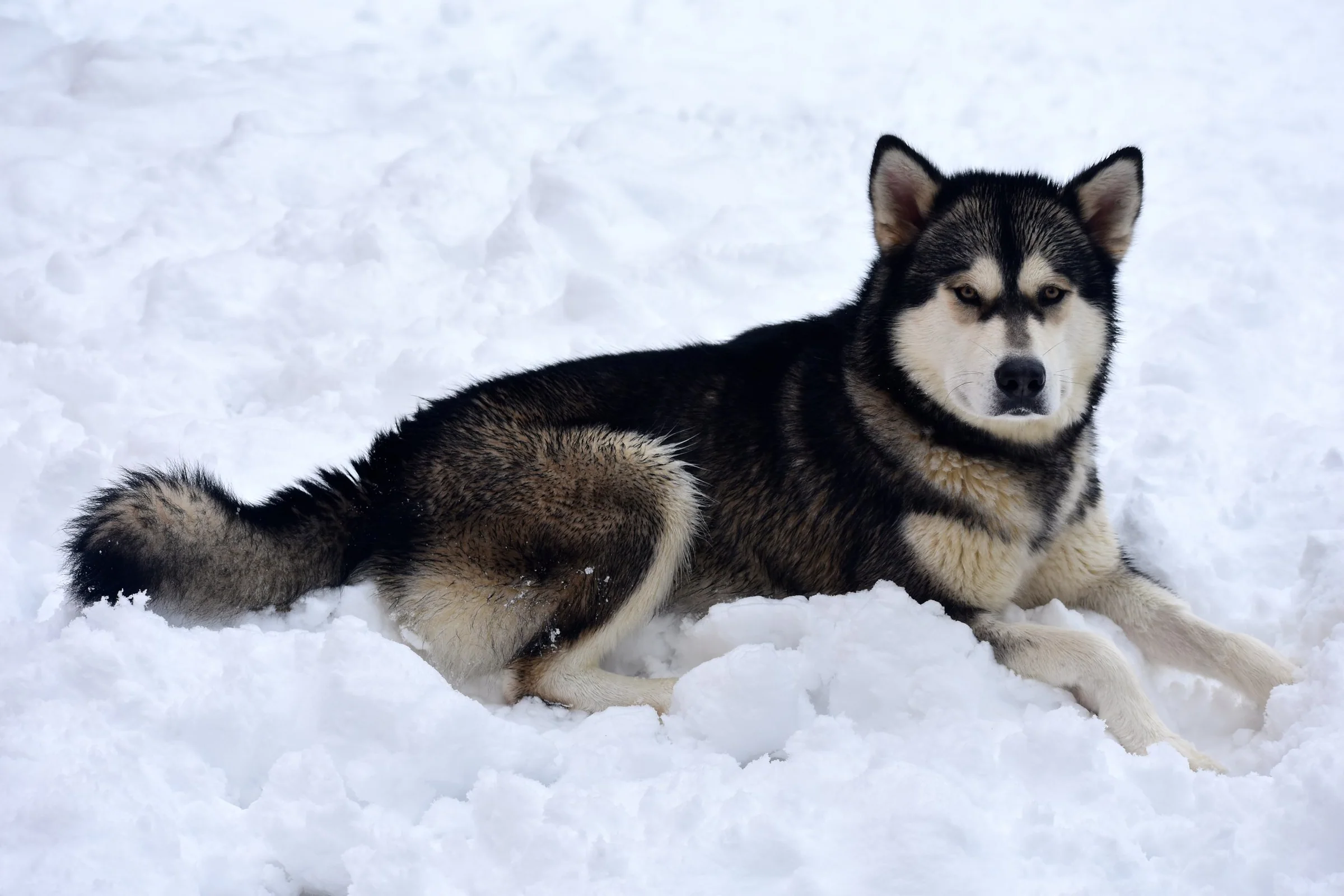
As often happens, the actions of a small number of people changed the course of history. Sleds were among the most widely used means of transport in Alaska, and some of the people who drove them—the mushers—decided to save a canine lineage that was close to disappearing. Breeders of sled-dog lines began selecting the first Malamutes: dogs of exceptional strength, intelligence and loyalty.
The birth of the breed
Arthur Walden was the first breeder to work systematically with the breed. He later entrusted his dogs to Eva “Short” Seeley, now regarded as the mother of the Alaskan Malamute. In 1935, it was she who obtained recognition for the breed from the American Kennel Club. Eva’s line, named Kotzebue, had a gentle, steady temperament reminiscent of the early Mahlemiut dogs and of today’s Malamutes. Other lines—including M’Loot, Hinman-Irwin and Husky Pak—were developed alongside it and were later combined with Kotzebue dogs to produce the breed we know today.
The serum run
One event in particular brought northern sled dogs to the attention of the wider public: the story of Balto and the legendary serum run to Nome. Nome was an Alaskan town more than one thousand kilometres from the nearest railway. On 20 January 1925, while snow and ice had completely isolated the town, an old telegraph carried an urgent warning: a diphtheria outbreak was spreading and antitoxin was desperately needed. An aircraft carrying the serum from Seattle was forced back by bad weather, so the medicine travelled by train from Anchorage to Nenana, the closest station. From there, sled dogs would have to cover the remaining thousand kilometres along the trails normally used to carry mail. Mushers and their teams faced extreme conditions, temperatures between twenty and fifty degrees below zero, snowstorms and arctic nights. Their relentless relay delivered the medicine to Nome in only five days, over a route that normally took a month. Balto is remembered as the hero of Nome, but he was one of many dogs that ran across Alaska to save the town. He completed the final delivery, while other dogs made equally extraordinary efforts. Togo, the Siberian Husky led by the renowned musher Leonhard Seppala, guided his team for 417 kilometres across frozen lakes and otherwise impassable woodland. Balto is also often described, somewhat imprecisely, as a Siberian Husky; he was probably a cross carrying several bloodlines. What is certain is that many teams involved in the relay included Alaskan Malamutes.
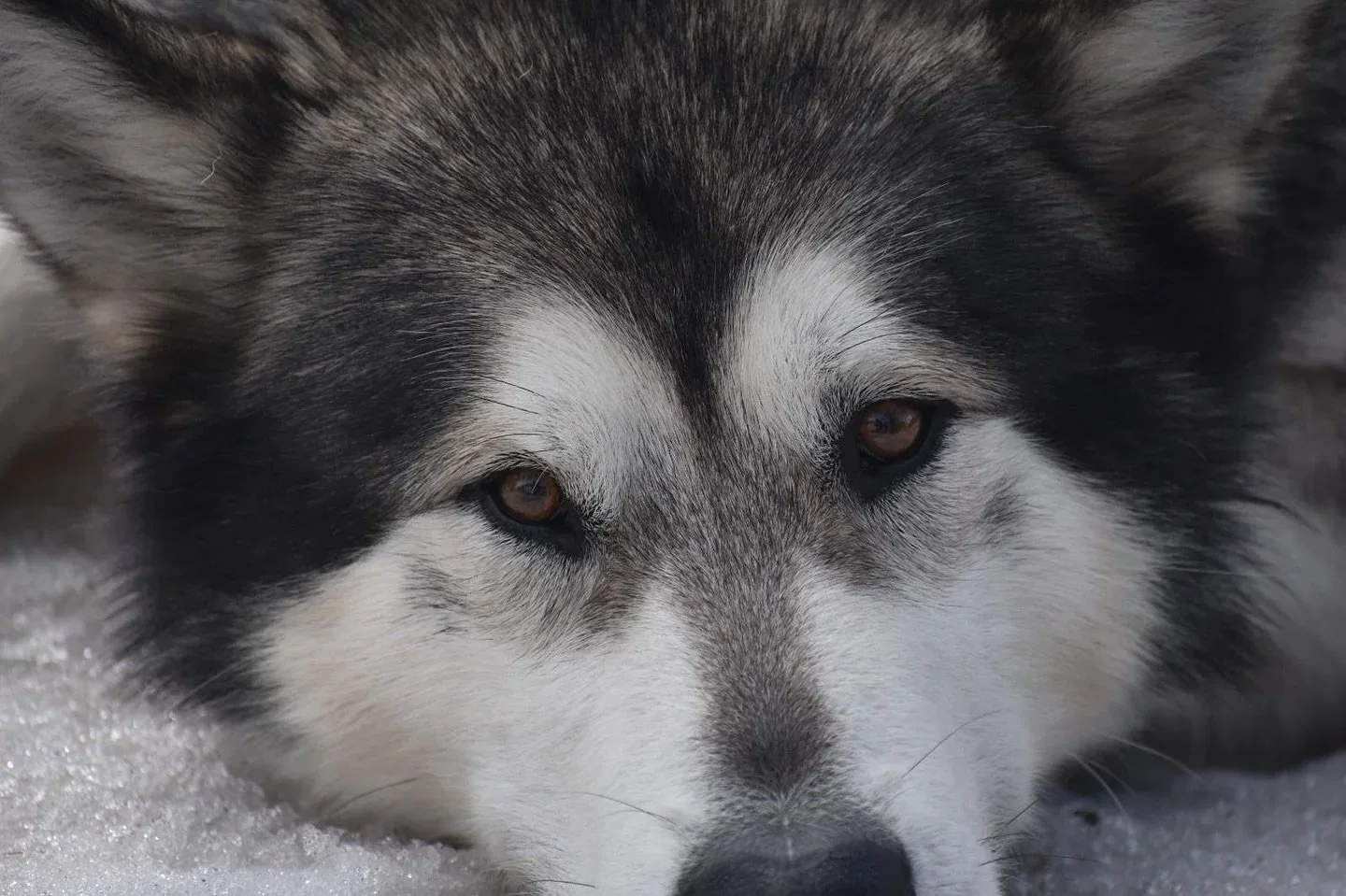
The mushers played an essential and irreplaceable role, but the mission could not have succeeded without their exceptional dogs. They later recalled nights and storms in which visibility became so poor that the trail disappeared completely. In those moments, only the instinct and courage of the lead dogs kept the sleds on the right course.
This is the Alaskan Malamute: a dog that has travelled through history beside its human companions. A dog that depends on people, and on which people depended for centuries. This mutual reliance is what makes our relationship with the breed so singular.
Living with a Malamute
Anyone welcoming an Alaskan Malamute into their pack should remember the history that binds us to these dogs. They are strong and bold like their wolf ancestors, yet gentle, intelligent and sensitive. Their family is their pack. Although deeply independent, they want to be part of the group and suffer when left alone. They are generally sociable and tolerant with children, a legacy of life in the confined space of Mahlemiut tents. Malamutes can learn a great deal, and learn quickly, but they do not enjoy blind obedience. A Malamute responds because it trusts its human companion and chooses to cooperate—not because it has simply been ordered to do so. That trust must shape the dog’s character, because the independent choices it makes throughout life will be grounded in the relationship.
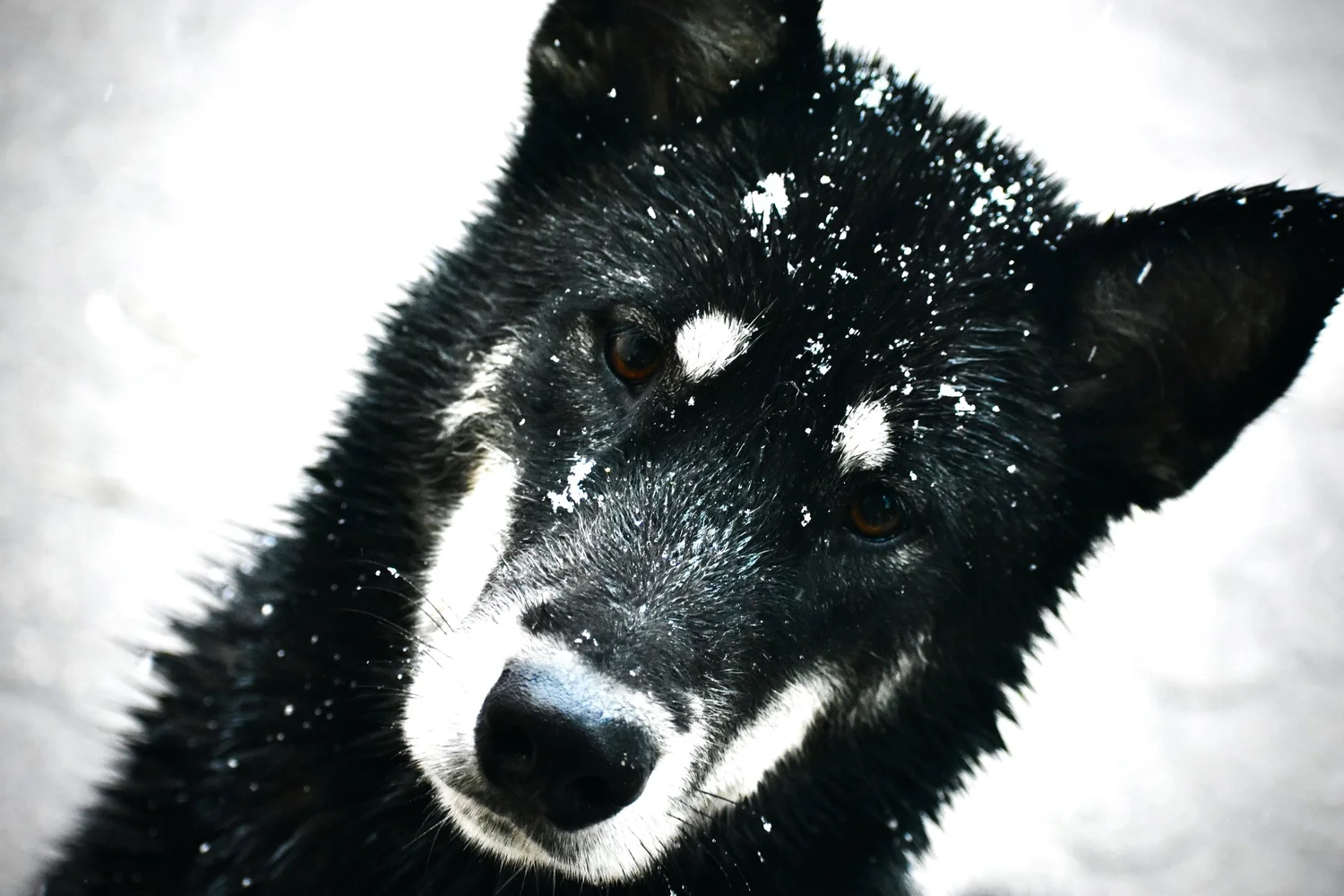
Despite their close resemblance to wolves, Alaskan Malamutes are not particularly territorial and should not be considered guard dogs.
Alaskan Malamutes are exceptional dogs and deserve exceptional packs capable of welcoming and understanding them. For this reason, we accept both the responsibility and the privilege of choosing the people to whom we entrust our puppies. A Malamute is not right for everyone, and not everyone is right for a Malamute. We therefore offer a short pre-adoption programme so that each decision can be made with greater awareness and consistency.
If you believe you are ready, prepare for an extraordinary adventure.